In the winter of 2025, I travelled to Kyoto with my mother.
It was my first time in Japan. Before that, I knew almost nothing about the country. Setting aside its heavy history, nearly everything I knew about Japan came from Detective Conan, the only Japanese anime I had ever watched.
Before the trip, someone told me there was not much to see in Japan—that it was, after all, only a small island.
If you were looking for vast deserts beneath a solitary plume of smoke, sunsets over endless rivers, sheer cliffs rising thousands of feet, or mountain ranges pressing against the horizon, you would not find them here.
It was only after I arrived that I understood why some people saw Japan that way.
It is, indeed, a small world.
The houses are small. The cars are small. Even the flowers and leaves seem more delicate than those elsewhere. Everything here carries a sense of restraint and quiet.
There is no doubt that we are instinctively drawn to grandeur. Nothing can quite replace the shock and power of something vast and magnificent.
Yet during the brief seven days my mother and I spent there, I began to notice that even within this miniature world, life could still feel abundant.
There were a few moments when I could almost see tenderness moving quietly through the air.
A curl of incense smoke at Sanzen-in
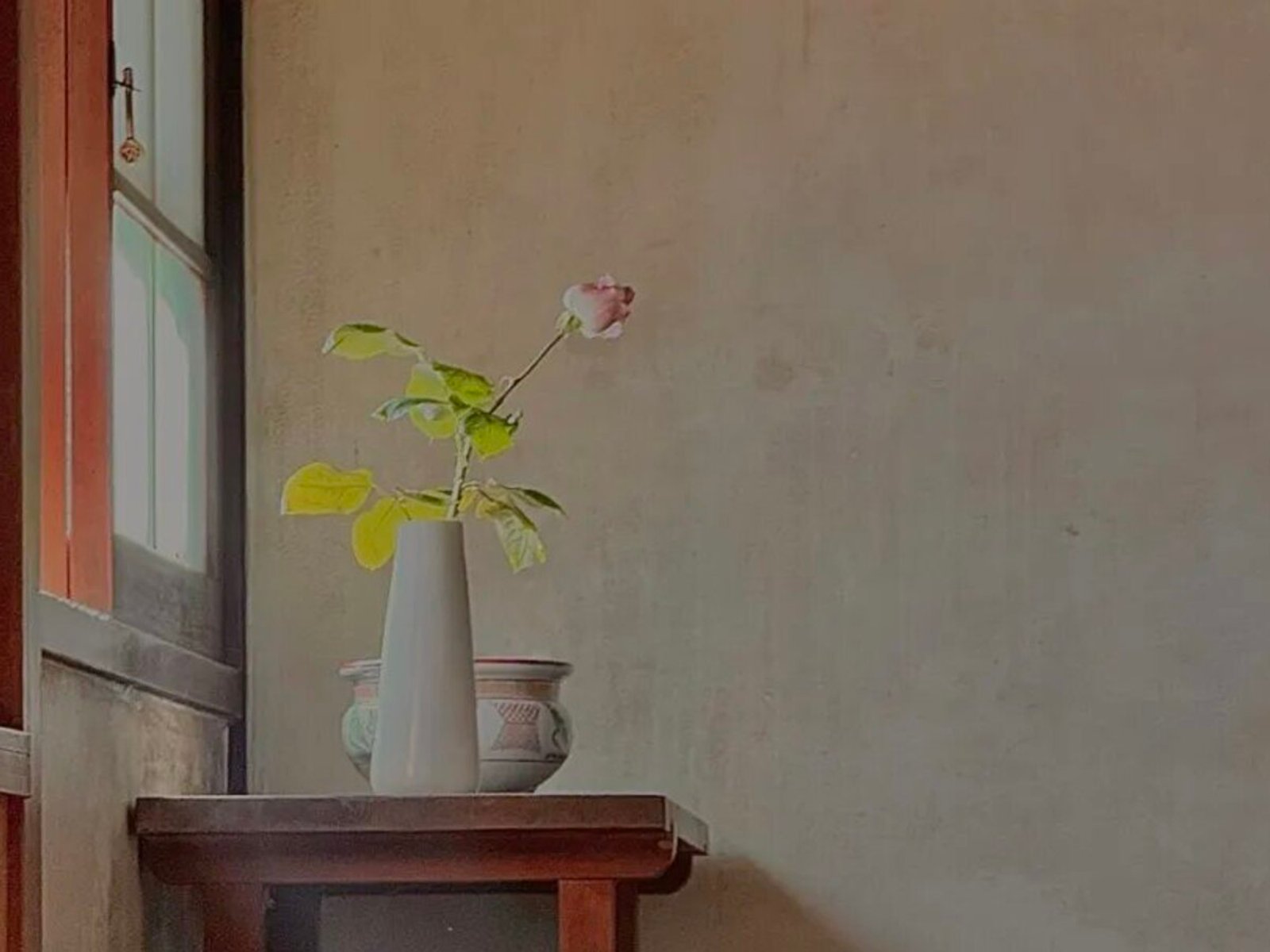
For a moment, the whole world felt still.
The route through Sanzen-in begins at the Gotenmon Gate, continues through the reception hall and temple buildings, and eventually leads into the garden.
Visitors are required to remove their shoes before entering.
In late December, damp cold rose from deep within the mountain forest. Carrying their shoes in their hands, people unconsciously quickened their pace, eager to leave the hall and reach the garden.
I had stopped in the covered corridor while waiting for my mother to use the bathroom.
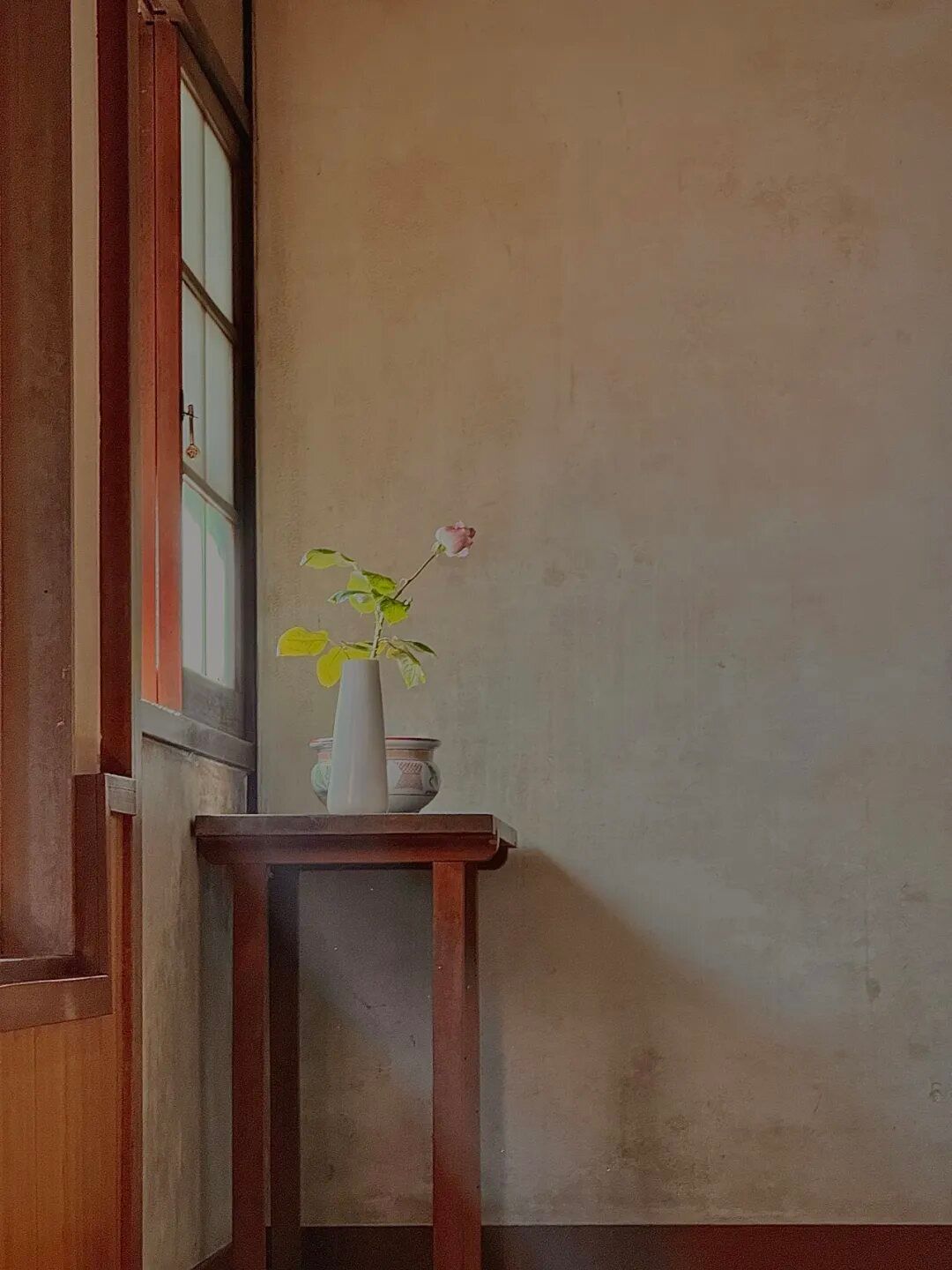
Then, almost by accident, I noticed a small table in the corner.
That was the moment I suddenly understood why people are so drawn to incense.
It held a powerful kind of stillness.
The visitors rushing past me began to blur, as though the scene were skipping frames and I had suddenly stepped into a vacuum.
Only seconds earlier, I too had been desperate to escape—the cold floor beneath my feet had become almost unbearable, and I was impatient to move on to the next sight.
But in that moment, I saw everything differently.
The warm winter morning sun insisted on slanting into the corridor, gently heating the damp wooden floor.
Dust floated freely through the tiny universe of light, unhurried and weightless.
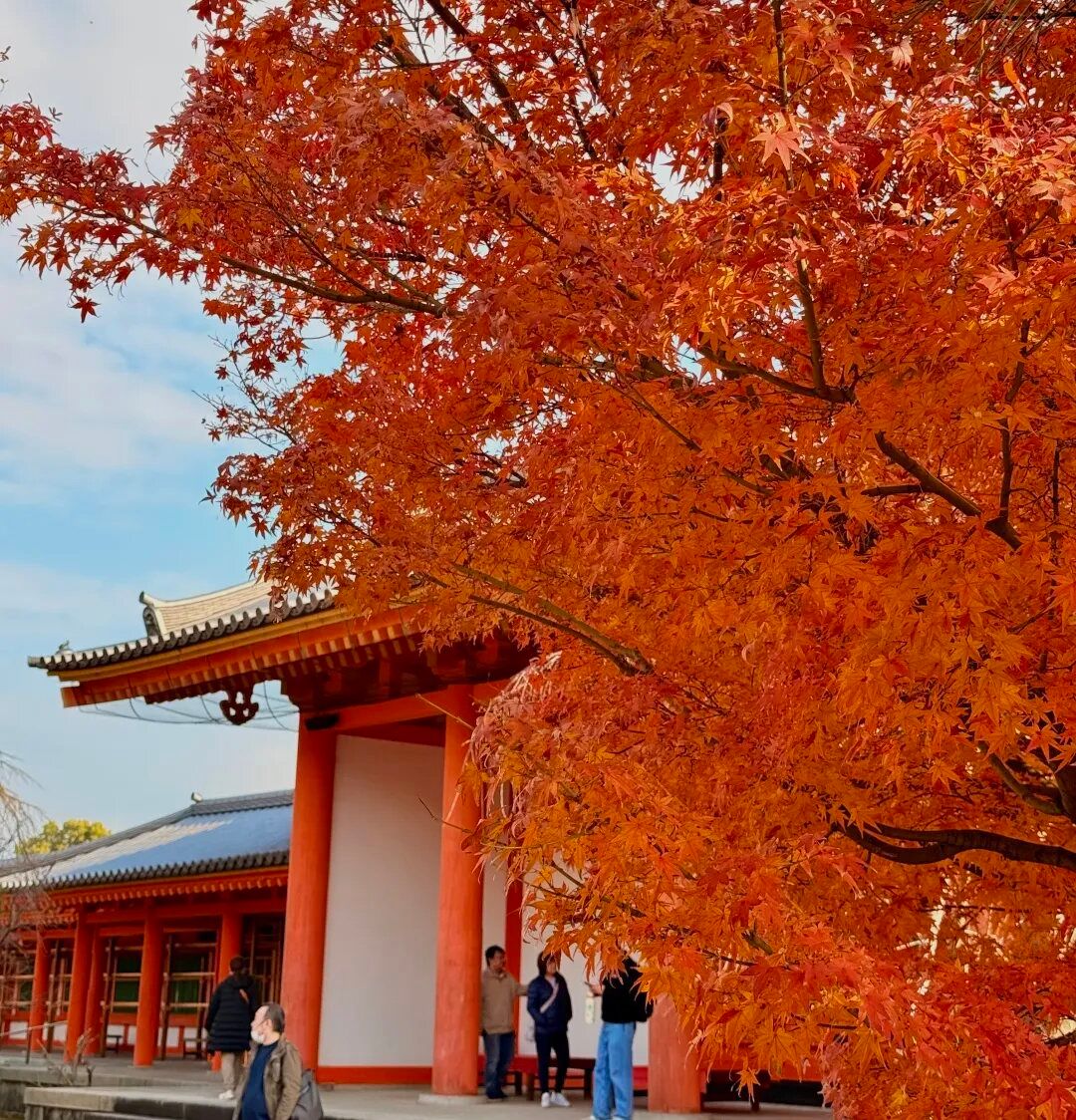
A ribbon of blue-grey smoke released the scent of white lotus and green tea. It drifted towards the late maple leaves outside the window, teasing them softly, tracing the shape of Kyoto through its four seasons.
For a moment, it felt as though I had completed a meditation without meaning to.
My vision cleared. My energy returned.
And I continued on to the next part of the journey.
Kasuga Taisha at the edge of dusk
Our third day was spent in Nara.
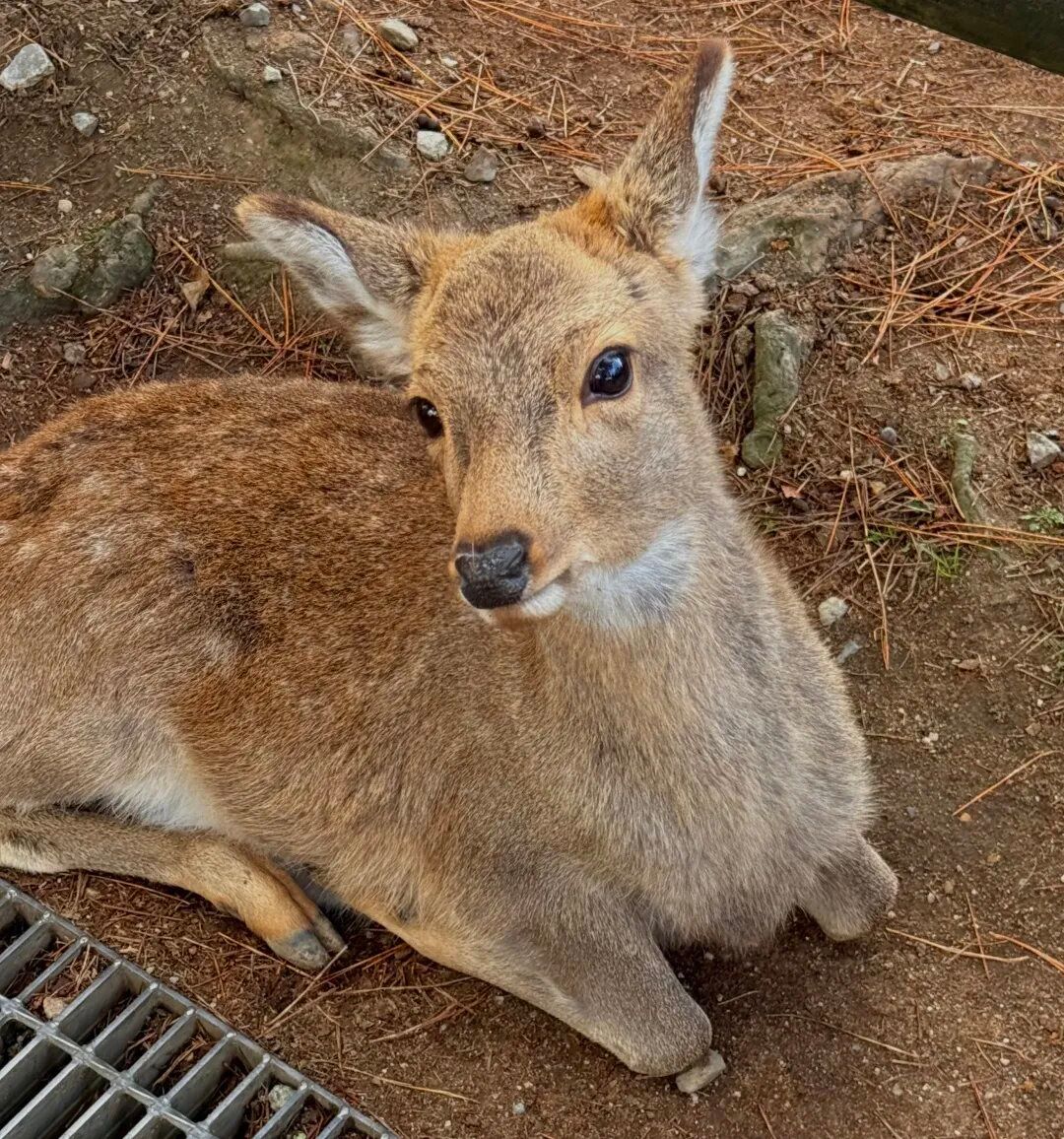
We had planned to visit the National Museum, see the deer in Nara Park, walk through Todai-ji, and then head to Kasuga Taisha for the final day of the Nara Kasuga Festival. I had arranged our Nara itinerary around the festival for that reason.
My mother and I loved Todai-ji, so we stayed much longer than expected. By the time we left, the sun was already beginning to set.
According to the original plan, we should have finished visiting Kasuga Taisha and been on our way back to the hotel.
At that hour, it seemed obvious that there would be nothing left to see.
I asked my mother, without much enthusiasm, whether we should still go.
“We’ve come all this way,” she said.
So we dragged our tired bodies up the mountain, walking almost mechanically.
Cold, hunger and exhaustion had taken over. At one point, my blood sugar dropped so low that I felt faint.
After more than twenty minutes, we finally reached Kasuga Taisha.
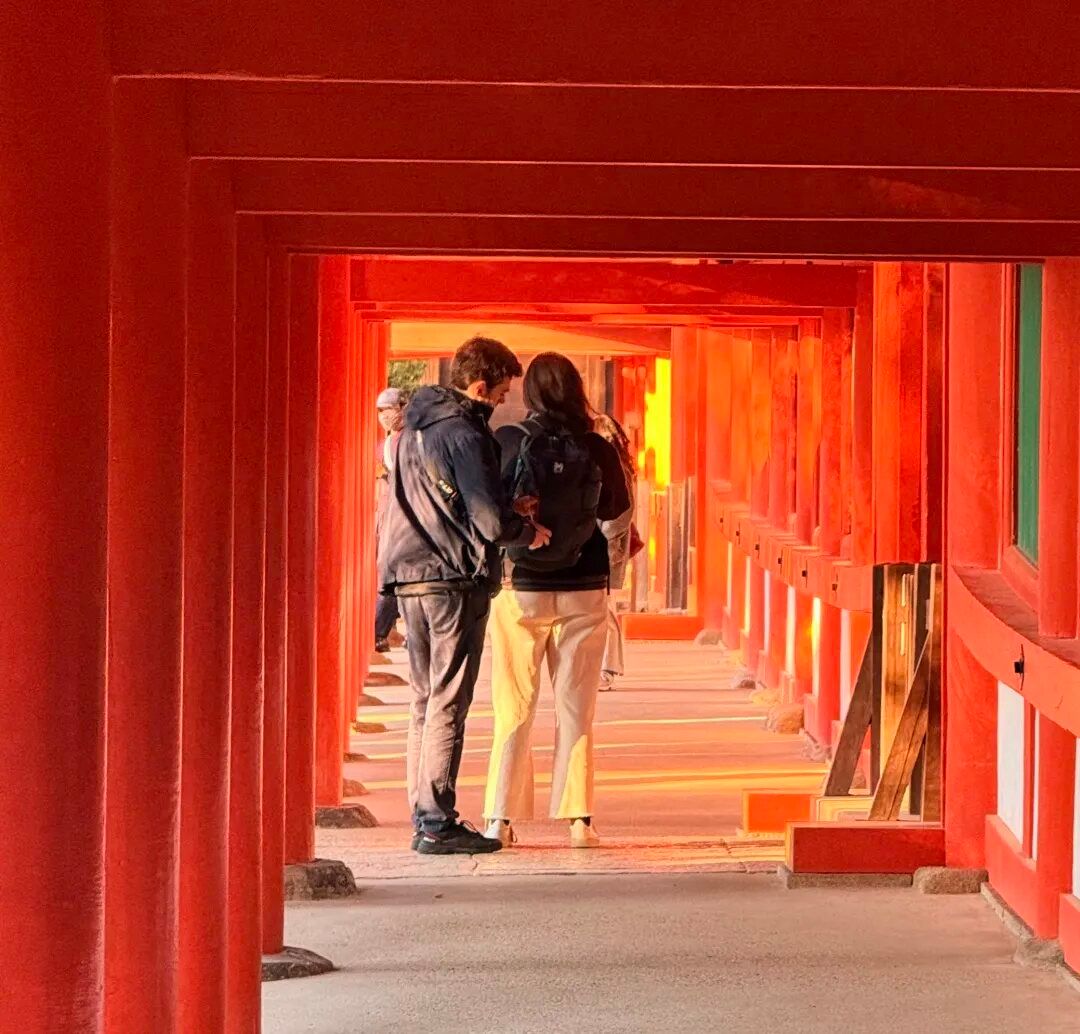
Then, in the rear courtyard, a vermilion corridor appeared.
At its far end, the setting sun had set everything ablaze in gold. It looked like a beam of light from the final scene of an apocalyptic film, carrying with it a sense of salvation descending from the sky.
A foreign couple stood inside the light, taking photos of each other.
In that moment, I understood why we had climbed the mountain.
I was grateful that my mother had said, “We’ve come all this way.”
Because at the very edge of dusk, I had managed to catch a glimpse of love.
So I lifted my camera and asked my mother to step into the light.
In that moment, love was moving between us.
A once-in-a-lifetime meeting with someone from home
For our day in Arashiyama, I joined a small tour of six people.
Our driver was a warm and talkative man from Qingdao who had been working in Japan for more than ten years.
Throughout the journey, he spoke about everything—from the Asuka and Nara periods to the Showa era, from kaiseki cuisine and the best places for wagyu beef to the craft of matcha and the Japanese philosophy of living.
Even someone who knew nothing about Kyoto would have ended the day with a rich understanding of its food, history and culture.
He did not have to tell us any of it.
But he said he enjoyed talking with people from home.
He told us that this moment belonged to our own ichigo ichie—a meeting that happens only once—and that he wanted to treat it with sincerity.
At that moment, I felt warmth moving through me in the sharp winter air of a foreign country.
I believe everyone else in the car felt it too. By the end of the day, they were all telling him that they would recommend him to friends who planned to visit Japan.
The meaning of travel has never been found only in scenery.
It lives in these unexpected encounters, in these brief but genuine connections.
Some strange arrangement of the universe allows us to meet far from home, travel together for a short distance, and share one small stretch of time.
Then we return to our separate lives.
Most likely, we will never see each other again.
Yet the beauty of that moment truly existed.
This is true of the connections between people.
And perhaps it is also true of our relationship with life itself.
We are always moving forward, chasing one mountain after another, reaching towards something greater and farther away.
But perhaps we should stop occasionally, lower our gaze, and notice the landscape that is already here.
To feel these small, fleeting moments as they pass through us.
Because it is these tiny moments that slowly come together to form the long story of a life.
“These small moments are what build the long story of a life.