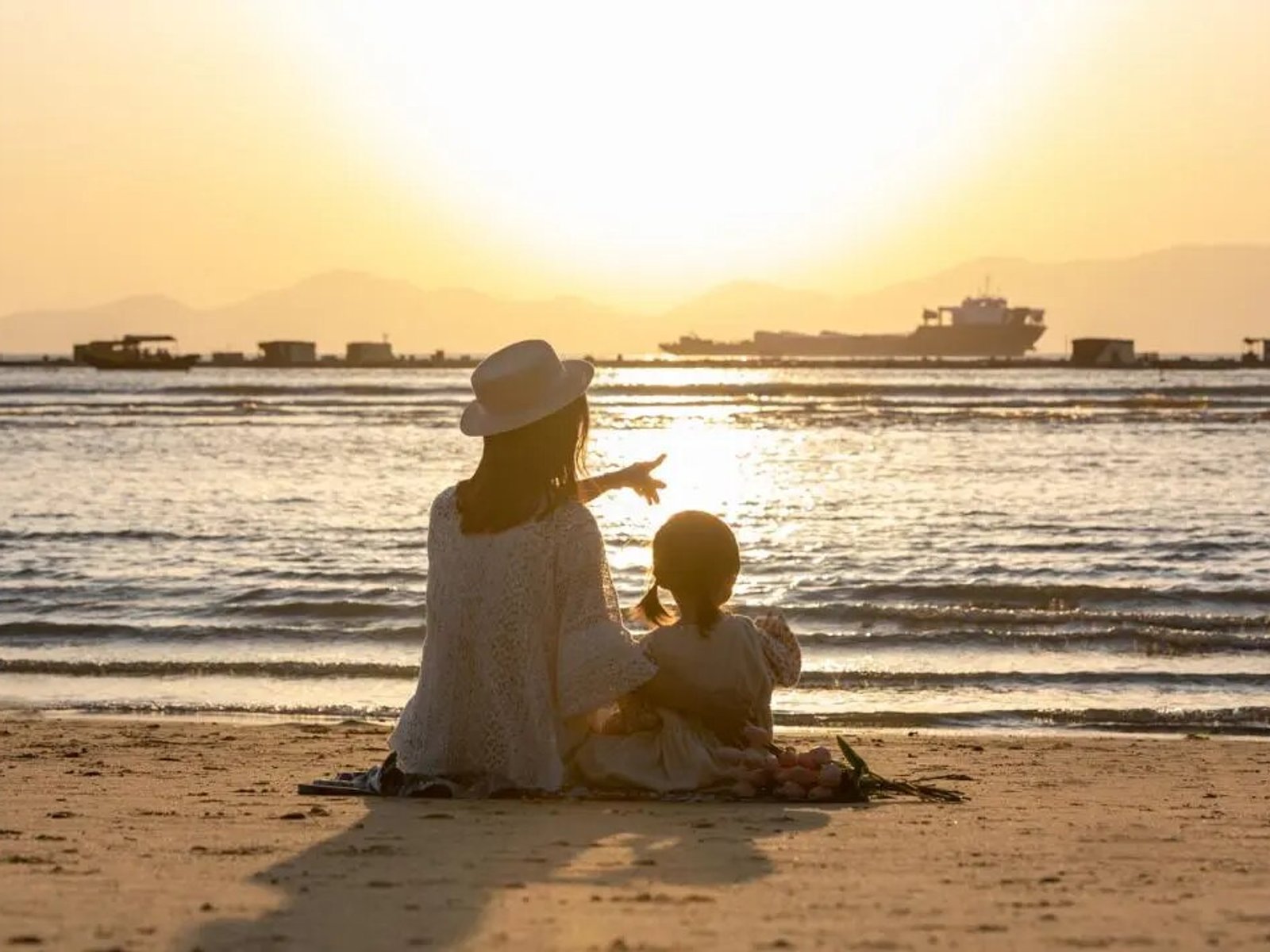
Three years ago, my cousin sent me a video of my mother.
It still returns to me from time to time.
Beside the underground escalators at Wuhan Metro Line 2, people streamed past in every direction. In the middle of the platform, between rows of screen doors leading to different trains, stood a small, thin figure with her shoulders slightly hunched.
She held her phone tightly in both hands, looking down at the screen, then glancing around anxiously. The backpack on her shoulders seemed almost large enough to cover her entire body.
In the crowd, she looked like a lost child.
But in my memory, my mother was 166 centimetres tall.
She was the one who had always reminded me to stand straight, lift my head and never slouch.
It was my first trip back to China after the pandemic, and the first time my mother had travelled alone from our small hometown in Hubei to Wuhan Airport to meet me.
My cousin worked in Wuhan and happened to be free that day, so she went to find my mother and travel to the airport with her.
In the video, the tension in my mother’s brow did not ease until the moment she saw my cousin.
That was when I first realised that my mother was no longer quite the person I remembered.
Before then, I had always believed she could do anything.
When I was a child, she was the most dazzling woman in my world.
She stood tall. She was confident and radiant.
Even though she had to wear a uniform at work, she would arrive at the office in ten-centimetre heels, dressed in carefully matched clothes, her hair curled and styled. Only then would she change into her workwear.
She walked into every room with ease and confidence.
She was equally determined in her career. Whatever she did, she wanted to do it well. Certificates and awards filled the cupboards at home.
She was also the backbone of our family, the person everyone relied on.
No matter what happened, if my mother was there, it would somehow be resolved.
Whenever I made a mess of something and became frightened or wanted to retreat, she would calmly tell me, “It’s not a big deal.”
Then she would patiently help me and work out a solution with me.
In my world, she had simply been born strong, clear-minded and fearless.
But after watching that video of her coming to meet me in Wuhan, I slowly began to understand that she, too, could be afraid.
She could feel lost in unfamiliar places.
Perhaps her inner world had never been as invincible as I had imagined.
Two years ago, my parents came to visit me in Australia.
While travelling around Sydney, I saw a quiet version of my mother for the first time.
Back home, she is someone who speaks easily and well. At family gatherings, her bright, open laughter can always be heard across the room.
But in Australia, she hardly spoke.
She stayed close beside me, moving carefully and cautiously.
When strangers passed us and greeted her warmly, she would lower her head, drop her eyes and press her lips into a smile so faint that the other person might not even notice it.
My father, on the other hand, was exactly as he had always been.
He became excited whenever we went somewhere new and remained curious about everything.
He could not speak English either, yet he greeted strangers every day with an enthusiastic “Hello.”
Even when they replied in English and he understood nothing, he would laugh and answer in Chinese, “Hello, hello, thank you.”
At first, I assumed my mother was afraid to speak because she did not understand English.
I could understand that. Put me in a place where I could not understand the language, and perhaps I, too, would become cautious at first.
But before long, I realised that language might have been one barrier, though it was not the real reason.
Even in Chinatown, where Chinese faces, characters and restaurants surrounded us, my mother remained quiet.
When she needed something and had to speak to a Chinese-speaking staff member, she would still ask me in a soft, timid voice to communicate for her.
She seemed completely different from the woman who moved so confidently through social situations at home.
Perhaps Australia placed both cultural and linguistic distance between her and the world around her.
But on our recent trip to Japan, I understood more clearly that what truly frightened her was unfamiliarity itself.
Perhaps she had always been this way. I had simply never seen it.
I had imagined that Japan, with its familiar Chinese characters and similar cultural background, would allow her to relax and enjoy the journey.
I thought I might see again the outgoing, open-hearted mother I remembered from childhood.
Instead, she became quiet once more, as though she had placed herself inside a transparent shell.
Unless I actively introduced something to her, she would not move towards anything new on her own.
When I travel, I like to wander slowly.
I enjoy the unexpected scenery found on the way to a destination. I like speaking to local people and learning about the details of a place that outsiders might otherwise miss.
When I take a wrong turn, I simply enjoy the street I was not supposed to see.
My mother, however, seemed uninterested in the journey between one destination and another.
She only relaxed slightly once we arrived at the planned attraction.
When staff members or strangers greeted her, she would lower her head and smile with pressed lips, just as she had in Sydney.
Once again, she looked like someone afraid of social interaction.
On the day we went to Arashiyama, I booked a small Chinese-speaking tour.
Our driver and guide was a warm, talkative man from Qingdao. Throughout the journey, he enthusiastically introduced us to the local history, food and customs.
The atmosphere inside the car was lively.
I was curious about everything he said and kept asking questions.
Beside me, my mother remained silent, listening quietly or looking out of the window.
But at home, she was always the one who started conversations.
One of my clearest childhood memories comes from when I was ten years old.
My mother’s workplace organised a month-long trip to Xiamen, and she took me with her.
On the coach, she chatted easily with her colleagues, shared snacks with everyone and helped the other mothers look after all of us noisy children.
The children loved being around her.
Whether we were climbing mountains or rafting, she was always ahead of me.
I did not like having my photo taken at the time, but she insisted on recording those moments.
Before the trip, she had even borrowed a camera from a colleague.
She would stop strangers and ask them to take photos of the two of us together.
In Japan, I had become the one walking ahead, pulling my mother into photographs.
She had become the timid person beside me.
I do not know when our roles changed.
Her unease did not disappear until our return flight landed in Wuhan.
It was already two in the morning. We still had to take a taxi to a hotel in the city and wait until the next day to return home.
Yet the moment the plane touched down, my mother let out a long breath and said, “As soon as I’m back in Hubei, it feels like I’m home.”
Returning to familiar surroundings was like watching a fish slip back into water.
On the taxi ride from the airport to the hotel, I became the silent one looking out of the window.
My mother, meanwhile, spoke easily and animatedly with the driver.
Why was the mother travelling beside me now so different from the woman I remembered from childhood?
And when did the person who once held an umbrella over me begin to fear the rain?
Perhaps, on those childhood trips, she was surrounded by familiar colleagues and still moving through a world she understood.
Perhaps she had never been without fear.
She had simply remained inside familiar boundaries.
Perhaps the person holding the umbrella had always been afraid of the rain.
I had just been too young to notice.
I think I finally understand that my mother was never born a superhero.
She, too, feels nervous. She, too, becomes frightened. She, too, is afraid of the unknown.
But when faced with a young life whose wings had not yet grown, she had no choice but to put on armour.
She built a safe and beautiful world around me.
And somewhere along the way, without either of us noticing, our places quietly changed.
Now it is my turn to stand in front of her.
My turn to hold up the world.
“The mother who seemed capable of everything is also living this life for the first time.